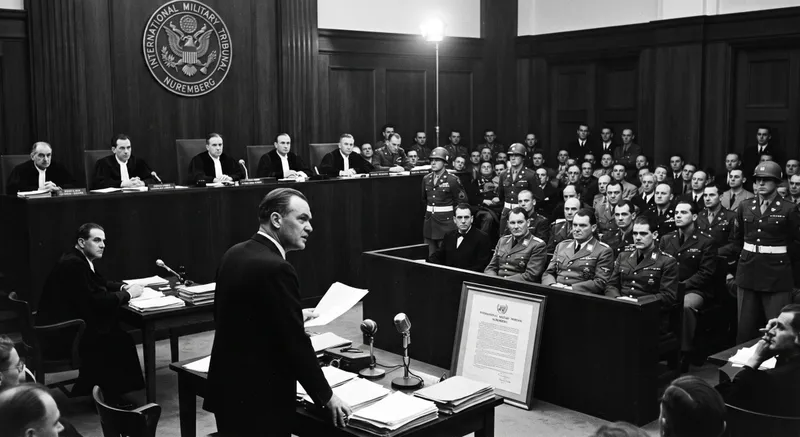
The Nuremberg Trials: Justice After the Abyss
For the first time in history, the leaders of a defeated nation were tried not by the sword but by the law of humanity.
WOW Score
After Germany's defeat, the Allied powers put twenty-four major Nazi leaders on trial in the Bavarian city of Nuremberg for crimes against peace, war crimes, and crimes against humanity.
The proceedings were unprecedented: a public, evidence-driven tribunal rather than summary execution. Harrowing film and documents from the concentration camps were entered into the record.
Twelve defendants were sentenced to death, others to prison. The trials articulated a new idea that aggressive war and genocide are crimes punishable under international law.
"Instead of vengeance, the victors chose a courtroom. The defense 'I was only following orders' was answered by the birth of international law."
Nuremberg established the principles of individual criminal responsibility for war crimes and crimes against humanity, leading directly to the Genocide Convention and the International Criminal Court. It set the precedent that even heads of state are not above the law.
The Full Story
A Choice for Justice
The Allies debated simply executing the Nazi leadership. Instead they chose a trial, believing a legal record would more powerfully delegitimize the regime and establish principle.
The Verdict on Silence
The tribunal rejected the defense of superior orders as an absolute excuse, holding individuals accountable for knowing participation in atrocity.
The Legacy
Nuremberg inspired the Genocide Convention, the Universal Declaration of Human Rights, and modern international tribunals a lasting institutional response to atrocity.