The Montgomery Bus Boycott: A Year on Foot
For 381 days, a community refused to ride the buses and broke segregation through sheer endurance.
WOW Score
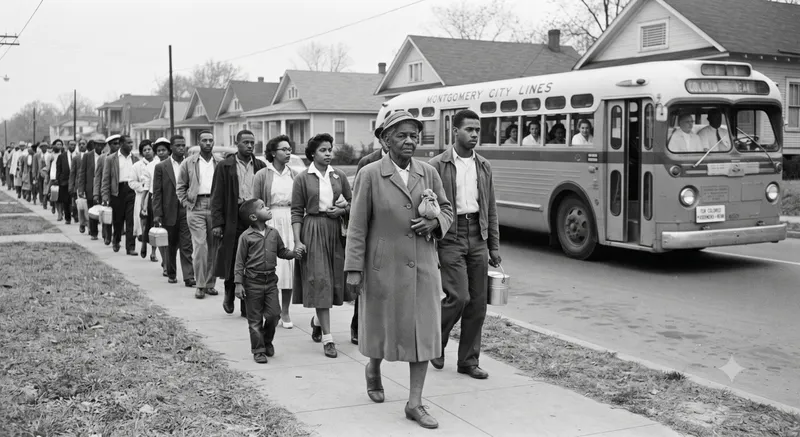
Sparked by Rosa Parks' arrest, Montgomery's Black residents organized a coordinated boycott of the city's segregated buses.
For more than a year, tens of thousands walked, shared rides, and endured harassment rather than submit to the humiliations of segregated seating.
A federal court ultimately struck down the segregation law, and the boycott ended in victory.
"They walked to work, carpooled, and stood firm for over a year. The buses lost their riders and segregation lost its grip."
The boycott ended with a Supreme Court ruling against bus segregation and catapulted Martin Luther King Jr. to national prominence. It established nonviolent mass protest as the engine of the civil rights movement.
The Full Story
Organization Is Power
The boycott was sustained by churches, women's groups, and a carpool system that moved thousands daily without the buses.
King Steps Forward
As spokesman for the boycott, King honed the philosophy of nonviolence that would define the movement.
The Legal Win
The Supreme Court's affirmation of a lower court ruling made the victory not just local but constitutional.