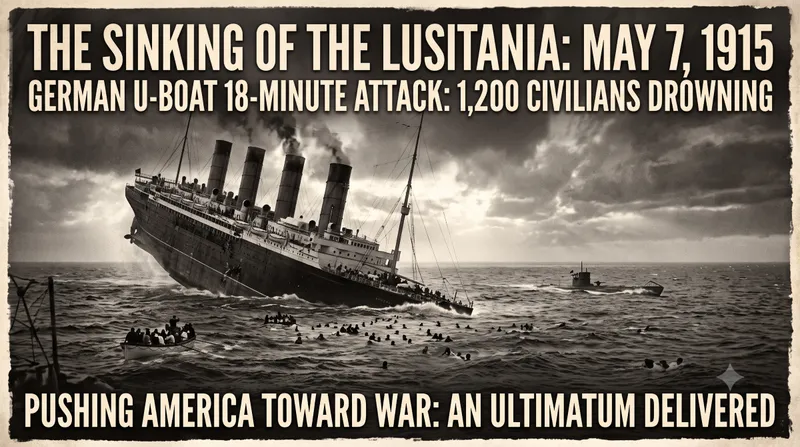
The Lusitania: A Torpedo That Shook the World
On May 7, 1915, a German U-boat sank a passenger liner in 18 minutes, drowning nearly 1,200 civilians and pushing the U.S. toward war.
WOW Score
The RMS Lusitania was one of the fastest, most luxurious ocean liners afloat, sailing from New York to Liverpool. Germany had warned that ships in the war zone might be sunk; the Lusitania sailed anyway.
Off the coast of Ireland, a single German torpedo struck. A second, larger internal explosion followed, and the ship went down in under 20 minutes. Of nearly 2,000 aboard, almost 1,200 died, including many women and children.
The catastrophe shocked the world and hardened American anger toward Germany, even though the U.S. would not enter the war for two more years.
"A floating symbol of peaceful travel became a casualty of total war. Among the dead were 128 Americans, and outrage that would not be forgotten."
The sinking inflamed American public opinion and became a key grievance when the U.S. entered the war in 1917. It also marked the brutal reality that in total war, civilian shipping was a target a precedent that shaped submarine warfare and atrocity narratives for the rest of the century.
The Full Story
War Comes to the Passenger Liner
Germany's unrestricted submarine campaign targeted Allied shipping. The Lusitania carried passengers but also, controversially, war materiel a fact Germany cited to justify the attack and the Allies downplayed.
The Mysterious Second Blast
The rapid sinking and secondary explosion have been debated for over a century. Whatever the cause, the speed of the disaster left lifeboats useless and the loss of life catastrophic.
A Grievance That Lasted
American deaths made the sinking a lasting wound in U.S.-German relations, feeding the propaganda that helped justify entry into the war and shaping how civilians came to be seen as casualties of conflict.