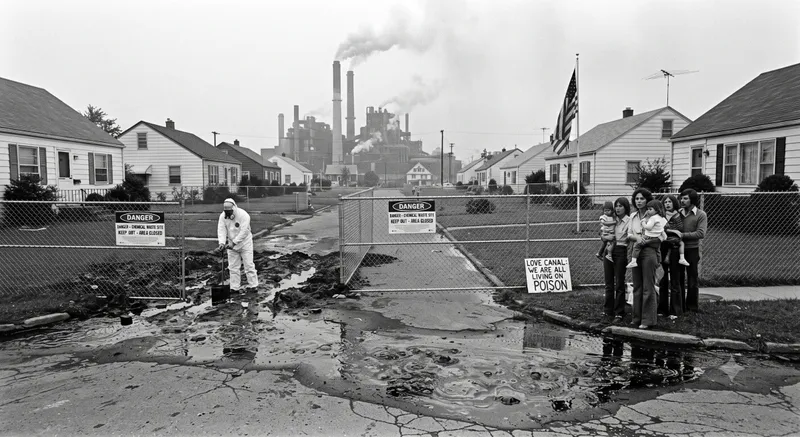
Love Canal: The Suburb Built on Poison
Families discovered their backyards sat atop a buried toxic waste dump and a movement for environmental justice was born.
WOW Score
A neighborhood in Niagara Falls, New York, had been built over a former canal used as a chemical dumping ground by an industrial company.
As the containers corroded, toxic substances leached into soil, water, and homes, causing health alarms among residents.
Driven by activist Lois Gibbs, the community forced an evacuation and a federal emergency, changing U.S. environmental policy.
"Chemicals seeped into basements and playgrounds. A neighborhood's fight forced the nation to confront its hidden waste."
The Love Canal crisis led to the creation of the U.S. Superfund program to clean toxic sites and galvanized the modern environmental movement, proving that pollution could be a neighborhood's silent emergency.
The Full Story
Buried and Forgotten
The site had been sold cheaply for development, its deadly history unknown to the families who moved in.
A Mother's Campaign
Gibbs organized her neighbors, turning a local grievance into a national scandal that reached the White House.
Superfund Born
The crisis directly inspired the 1980 Superfund law, funding the cleanup of the nation's most dangerous waste sites.