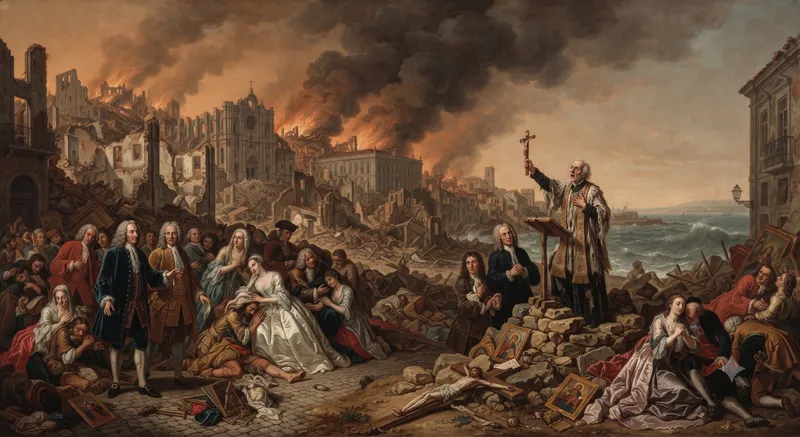
The Lisbon Earthquake: When God's Wrath Shook the Enlightenment
On a Sunday morning, a quake, a tsunami, and fires destroyed Lisbon and forced Europe to rethink the world and its maker.
WOW Score
On All Saints' Day, a massive earthquake struck off the coast of Portugal, followed by a tsunami and fires that razed much of Lisbon.
The destruction was total and shocking the pious and the powerful perished alike, undermining easy explanations of divine punishment.
Portugal's prime minister, the Marquis of Pombal, led a famously rational rebuild, and thinkers across Europe debated why a good God allowed such suffering.
"Churches full of worshippers collapsed first. The catastrophe rattled philosophers as much as buildings, and birthed the science of seismology."
The disaster killed tens of thousands and devastated a global empire's capital, prompting early disaster planning and the quake's study as a natural, not divine, event. It became a defining moment of the Enlightenment and modern emergency response.
The Full Story
Triple Catastrophe
The quake, the sea's surge, and the ensuing fires compounded into one of history's deadliest natural disasters.
Pombal's Reforms
The minister imposed standardized, quake-resistant construction and efficient relief, an early model of secular disaster management.
A Philosophical Quake
Voltaire and Kant among others wrestled with Lisbon, advancing the view that nature acts without moral purpose a cornerstone of modern thought.