The Klondike Gold Rush: To the Frozen North
When gold was found near the Yukon, a hundred thousand dreamers braved ice and mountain passes for a chance at fortune.
WOW Score
Gold was discovered in the Klondike region of the Yukon in 1896, and news triggered a stampede to the remote north.
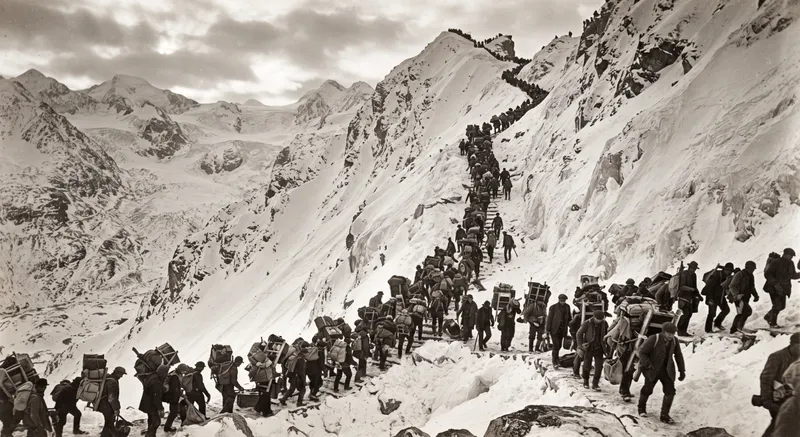
Prospectors crossed punishing passes like the Chilkoot, hauling mandated supplies, in one of history's harshest migrations.
Few grew rich from gold, but the towns, trails, and tales left a lasting mark on the Canadian and American West.
"They hauled a year's supplies over a mountain of snow, chasing a rumor of gold at the edge of the world."
The Klondike rush of 1896–1899 populated the Yukon, boomed Seattle and Vancouver as supply hubs, and became the archetype of the last great gold stampede. It fed the legend of the rugged northern frontier.
The Full Story
The Chilkoot Grind
Stampeders climbed the icy pass again and again, ferrying gear in stages to meet Canadian requirements.
Boomtowns of the North
Dawson City swelled with prospectors, gamblers, and merchants in a frozen, lawless boom.
Fortunes and Myths
Most came home empty-handed, but the rush embedded itself in popular imagination through photographs and literature.