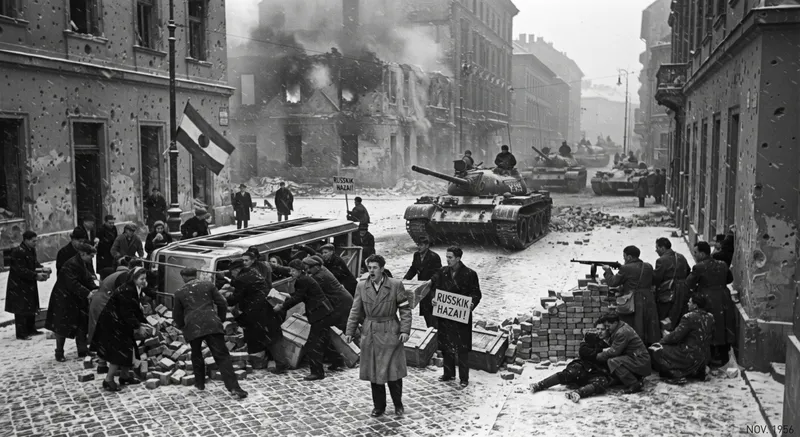
The Hungarian Revolution: Crushed in the Snow
A student march became a nationwide uprising against Soviet rule and was drowned in tanks within weeks.
WOW Score
Protests in Budapest against the Stalinist government swelled into a national uprising demanding freedom, democracy, and the withdrawal of Soviet troops.
For a few days, a reformed government negotiated a pullout and the rebels held the streets. Then Moscow sent in massive armored forces.
The resistance was crushed, its leaders executed or exiled, and a pro-Soviet regime installed. Thousands died and fled.
"Ordinary Hungarians tore down the symbols of Soviet rule and fought tanks with Molotov cocktails. The world watched and did not come."
The revolt's brutal suppression exposed the limits of Western resolve in the Eastern Bloc and terrified other satellite states into compliance. It became a lasting symbol of resistance and a wound in Hungarian national memory.
The Full Story
From Protest to Revolt
What began as a student demonstration escalated as workers and soldiers joined, tearing down the giant Stalin statue and fighting for genuine independence.
The Tanks Return
Khrushchev initially seemed to waver, then unleashed overwhelming force. The ill-equipped rebels were no match for the Red Army.
A Lesson and a Scar
The West's inability to help confirmed Soviet dominance in the east. The revolution became a foundational memory of Hungarian identity and resistance.