The Hindenburg Disaster: The End of the Airship Age
Live on the radio, the largest airship ever built burst into flame and killed the dream of passenger flight by zeppelin.
WOW Score
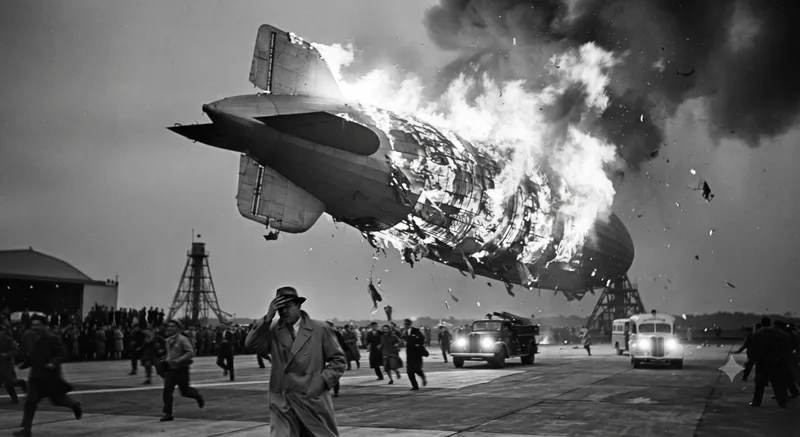
The German zeppelin Hindenburg, filled with flammable hydrogen, was landing at Lakehurst, New Jersey, when it suddenly caught fire and was destroyed in about 30 seconds.
Thirty-five of the 97 aboard died, along with a ground crewman. A radio broadcaster's horrified on-air cry captured the nation.
The disaster shattered public confidence in airships and doomed the grand era of luxury flight by balloon.
"Oh, the humanity! A floating hotel of hydrogen caught fire in seconds, and the age of the airship died with it."
The Hindenburg catastrophe ended the era of commercial passenger airships and accelerated the shift to heavier-than-air aircraft. Its burning image remains the defining symbol of a lost technology.
The Full Story
A Floating Luxury
The Hindenburg represented the pinnacle of interwar airship travel fast, smooth, and glamorous across the Atlantic.
The Inferno
The exact cause remains debated, but hydrogen's volatility turned a minor ignition into a total loss within half a minute.
The Airplane's Hour
With the zeppelin discredited, the future belonged to the airplane, which soon made long-haul passenger flight routine.