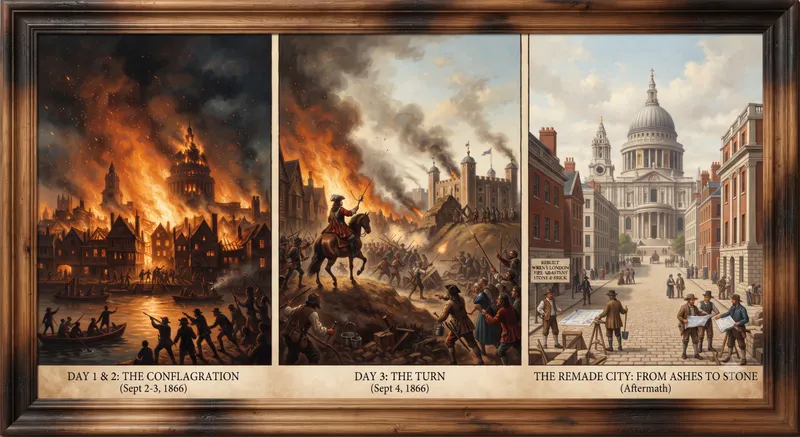
The Great Fire of London: Three Days That Remade a City
A bakery oven on Pudding Lane sparked a blaze that swallowed medieval London and cleared the way for the city we know.
WOW Score
In the early hours of September 2, a fire broke out in the bakery of Thomas Farriner on Pudding Lane. Fanned by an east wind, it spread through the tightly packed wooden houses of the City of London.
Efforts to stop it failed for days. The fire leapt from roof to roof, consuming churches, homes, and the medieval St. Paul's Cathedral.
When it died out, four-fifths of the city lay in ruins but the disaster became the catalyst for a modern, fire-resistant metropolis.
"A city of timber and pitch burned for three days. When the smoke cleared, a medieval world was gone and a new London could rise."
The fire destroyed much of the old city but ended the Great Plague's reservoir of crowding and prompted rebuilding in brick and stone, with new planning and the work of Christopher Wren. It reshaped London's architecture and governance.
The Full Story
A City Built to Burn
London's timber-framed, thatch-roofed houses stood shoulder to shoulder, a tinderbox awaiting a spark in a hot, dry summer.
The Slow Response
Confusion over authority and the use of ineffective firebreaks let the blaze gain ground before disciplined demolition halted it.
Rebuilding a Capital
Wren's new St. Paul's and a grid of wider streets rose from the ashes, marking the birth of the modern city.