The Gallipoli Gamble That Sank an Empire's Hubris
An ambitious plan to knock the Ottoman Empire out of the war by seizing the Dardanelles instead became one of WWI's costliest blunders.
WOW Score
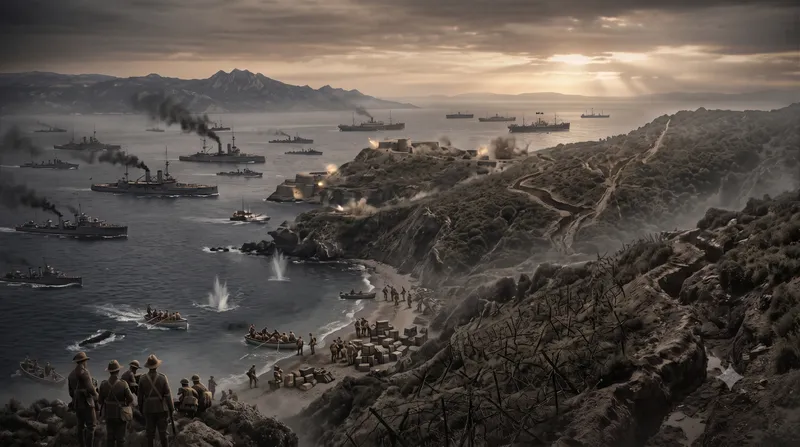
In 1915, the Allies sought a knockout blow against the Central Powers by forcing the Dardanelles strait, capturing Constantinople, and opening a supply route to Russia. The naval assault failed; a ground invasion of the Gallipoli peninsula followed.
Turkish forces, well-entrenched on high ground, pinned the invading ANZAC, British, French, and Indian troops to narrow beachheads. Months of stalemate produced horrific casualties from fighting, disease, and heat.
In a rare success, the entire force was evacuated in late 1915 and early 1916 under cover of elaborate deception a quiet retreat that cost far fewer lives than the campaign itself had claimed.
"Half a million men were committed to a peninsula that became a graveyard. The survivors were evacuated under cover of silence and deception."
The failed campaign toppled the British government and helped launch the career of Winston Churchill, then First Lord of the Admiralty. For Australia and New Zealand, the Gallipoli landings forged national identity through the ANZAC legend. It also stiffened Ottoman resistance under Mustafa Kemal, the future Ataturk.
The Full Story
A Strait Too Far
The Dardanelles was the soft underbelly of the Central Powers on paper, but the Ottomans had mined the waters and fortified the cliffs. The initial naval bombardment underestimated Turkish resolve and German-led engineering.
The Birth of a National Myth
For Australia and New Zealand, Gallipoli was the bloody baptism of nations. The courage of the ANZACs became central to how both countries understood themselves sacrifice on a distant shore that turned colonists into a people.
The Rise of Ataturk
A young Ottoman officer named Mustafa Kemal commanded the defenses at Anzac Cove and emerged a hero. His leadership there launched the path that would make him the founder of modern Turkey.