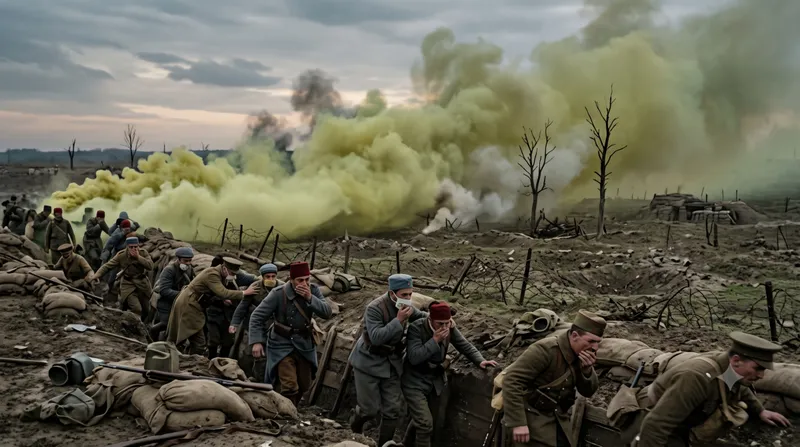
The Green Cloud at Ypres
On April 22, 1915, a yellow-green wall of chlorine gas rolled across the Flanders fields the first large-scale chemical attack in modern war.
WOW Score
German engineers released 168 tons of chlorine gas from cylinders along a four-mile front near Ypres. Carried by the wind, the dense green-yellow cloud suffocated and blinded the French and colonial troops in its path.
The gas opened a wide gap in the Allied line, but Germany lacked the reserves to pour through it, and the moment passed. The psychological shock, however, was permanent.
Within months, both sides deployed gas of their own. The primitive cloth masks of 1915 evolved into canister respirators, and chemical warfare became a grisly staple of the trenches.
"Men watched a cloud creep toward them and realized their lungs were the battlefield. War had found a new, invisible weapon."
The gas attack broke the Allied line at Ypres but failed to exploit the gap. It inaugurated a terrifying new era: both sides developed poison gas, gas masks, and chemical doctrine. Gas became a defining, hated symbol of WWI's industrialized cruelty and was later banned by the Geneva Protocol.
The Full Story
A Weapon Out of Myth
Gas weaponry shocked a world that associated war with visible enemies. Chlorine burned the lungs and turned victims blue; later agents like mustard gas blistered skin for weeks. The terror was as much psychological as physical.
The Missed Opportunity
German commanders had not expected the gas to work so well and had no plan to exploit the breach. The Allied line re-formed before the gap could be used, sparing a potential breakthrough.
Banned, but Remembered
The outrage over gas helped produce the 1925 Geneva Protocol banning chemical weapons a taboo that still shapes warfare today, even as the image of the cloud at Ypres became emblematic of the war's inhumanity.