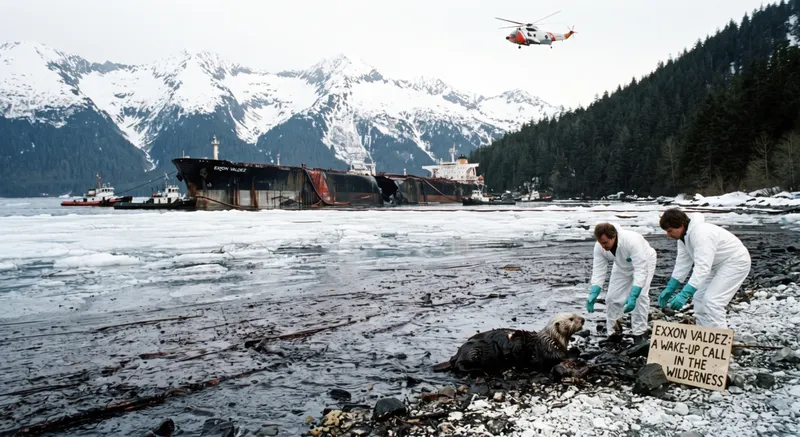
The Exxon Valdez: A Wake-Up Call in the Wilderness
A single tanker ran aground in pristine Alaska, spilling a river of oil that stained the coast for a generation.
WOW Score
The supertanker Exxon Valdez struck a reef in Prince William Sound, Alaska, releasing a vast quantity of crude oil into one of the world's most fragile environments.
The slick spread across thousands of square miles, killing seabirds, fish, and marine mammals and crippling local communities.
The disaster became a turning point in environmental regulation and public awareness of oil's risks.
"Tens of millions of gallons of crude coated a fragile shore. The spill changed how the world thought about oil and risk."
The 1989 spill devastated Alaskan wildlife and ecosystems, prompted the U.S. Oil Pollution Act and double-hull requirements, and became a lasting symbol of environmental catastrophe.
The Full Story
The Grounding
A lapse in navigation and oversight sent the tanker onto Bligh Reef, tearing open its hull in protected waters.
A Coast in Mourning
The spill's toll on wildlife and subsistence cultures was immense and, in places, still visible decades later.
Regulation Rewritten
The Oil Pollution Act of 1990 and mandatory double hulls followed, reshaping maritime safety worldwide.