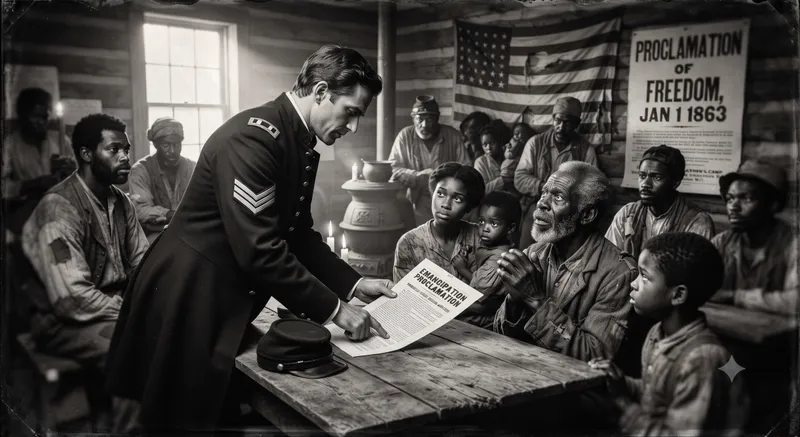
The Emancipation Proclamation: Freedom as a War Aim
Midway through a bloody war, a president declared millions of enslaved people free and changed the meaning of the conflict.
WOW Score
After the Union victory at Antietam, President Abraham Lincoln announced that all enslaved people in Confederate-held territory would be freed.
The Proclamation applied where the federal government had no control, so freedom came only as Union armies advanced but it transformed the war's purpose.
It also authorized the enlistment of Black soldiers, who would prove decisive to the Union cause.
"It did not free all the enslaved at once, but it made the war about liberty itself and opened the door to a new America."
Issued in 1863, the Proclamation reframed the Civil War as a fight against slavery, discouraged European intervention, and allowed Black men to enlist. It paved the way for the Thirteenth Amendment and the long struggle for civil rights.
The Full Story
A Wartime Measure
Lincoln justified emancipation as a military necessity, a careful legal step within his war powers as commander in chief.
The War's New Meaning
By linking Union victory to freedom, the Proclamation blocked British and French recognition of the Confederacy.
Toward the Thirteenth
The act was a beginning, not an end; the constitutional amendment that followed abolished slavery outright.