The Dust Bowl: When the Plains Turned to Dust
A decade of drought and plowing turned the American heartland into a desert, and sent a million people fleeing on Route 66.
WOW Score
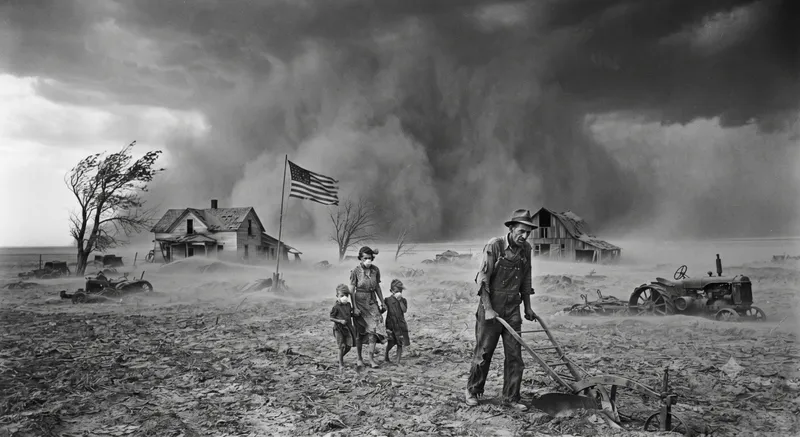
Intensive plowing of the southern Great Plains had stripped the native grasses that held the soil. When drought arrived in the 1930s, the exposed earth turned to dust.
Massive dust storms 'black blizzards' buried homes and crops, poisoned livestock, and choked the air for hundreds of miles.
Hundreds of thousands of 'Okies' migrated west, a human crisis woven into the story of the Great Depression.
"Black blizzards rolled across the plains and buried farms whole. The land that fed a nation simply blew away."
The Dust Bowl displaced hundreds of thousands of families, reshaped American agriculture and migration, and produced the literature of the era (The Grapes of Wrath). It became a cautionary tale of ecological mismanagement.
The Full Story
Plowed Into Ruin
The promise of endless wheat had removed the prairie's natural armor, leaving the topsoil defenseless against wind.
The Exodus
Families packed what they could and headed to California, often meeting hardship and resentment as they arrived.
Learning the Lesson
New Deal programs promoted soil conservation and tree breaks, changing American farming practice for good.