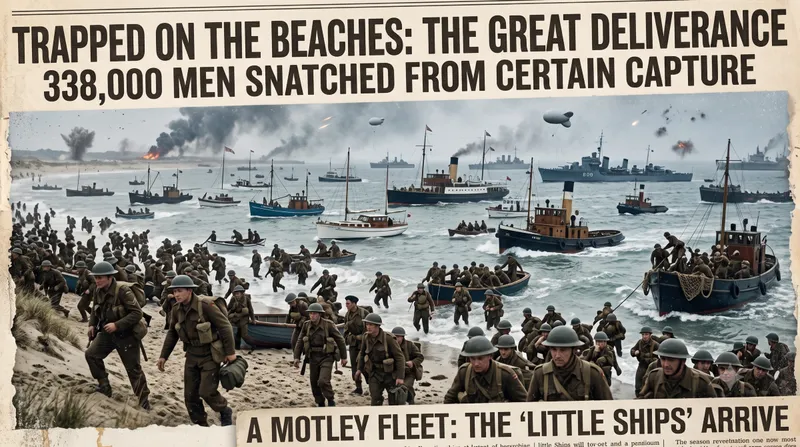
Dunkirk: The Miracle of the Little Ships
Trapped on the beaches with the sea at their backs, 338,000 men were snatched from almost certain capture by a fleet of fishing boats and pleasure yachts.
WOW Score
In May 1940, Germany's blitzkrieg overran France and trapped the British Expeditionary Force and Allied troops on the coast at Dunkirk. Nazi panzers halted, giving the defenders a slim window.
The Royal Navy lacked enough vessels, so hundreds of civilian boats trawlers, lifeboats, private yachts crossed the Channel to ferry troops from shore to ship. Over nine days, more than 338,000 men were evacuated.
The army escaped, but almost all its heavy equipment was abandoned. Britain stood alone against Hitler, with the men who would defend it still alive.
"Britain's army was destroyed as a fighting force and saved as a nation in the same nine days. Defeat became the foundation of survival."
The evacuation preserved the core of the British Army, making a continued fight possible after the fall of France. Churchill framed it as a deliverance even as he warned of the battles to come. The 'Dunkirk spirit' entered the national legend as a symbol of resilience against impossible odds.
The Full Story
The Halt Order
German commander Gerd von Rundstedt ordered his tanks to pause, fearing overextension and wanting the Luftwaffe to finish the job. That delay gave the trapped Allies the crucial days needed to organize the evacuation.
The Little Ships
Ordinary citizens piloted everything from Thames barges to motorboats across mine-strewn, bombed waters. Their intervention turned a military retreat into a people's salvage operation.
A Defeat That Won Time
Churchill called it a 'miracle of deliverance' but warned the battle of France was lost. The saved army would, within years, return to liberate the continent it had been forced to flee.