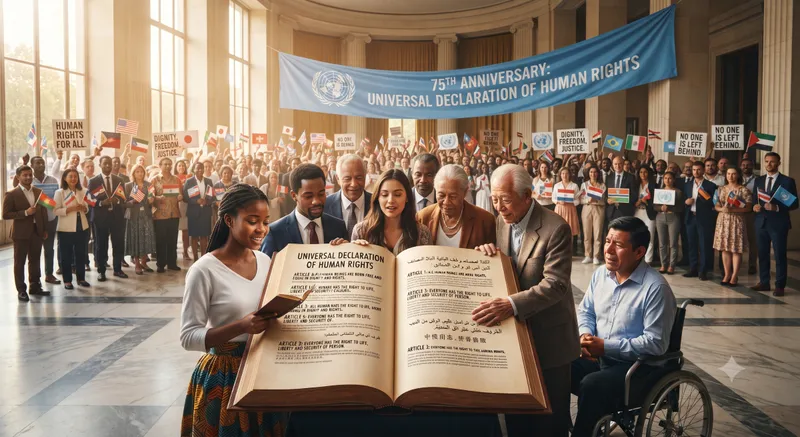
The Universal Declaration of Human Rights
In the shadow of Auschwitz and Hiroshima, the world agreed on a single list of rights every human possesses simply by being human.
WOW Score
After the atrocities of World War II, the new United Nations set out to define the rights belonging to every person, regardless of nation or creed.
Drafted by a commission chaired by Eleanor Roosevelt, the Declaration set out civil, political, economic, and social rights in thirty articles.
Though not binding law, it became the moral compass for the postwar world and the parent of later human rights treaties.
"Never again meant more than memory. The nations drafted a charter of dignity that no border could erase."
Adopted in 1948, the Declaration became the foundation of modern international human rights law, inspiring treaties, constitutions, and courts worldwide. It translated the horror of war into a universal standard of dignity.
The Full Story
Born of Atrocity
The Holocaust and worldwide brutality convinced leaders that rights must be declared globally, not left to states alone.
A Document Without Borders
It spoke of liberty, equality, and fraternity for all a leap from the narrow citizens' rights of earlier charters.
A Living Standard
From civil rights to decolonization, the Declaration became the reference point for struggles for freedom across the globe.