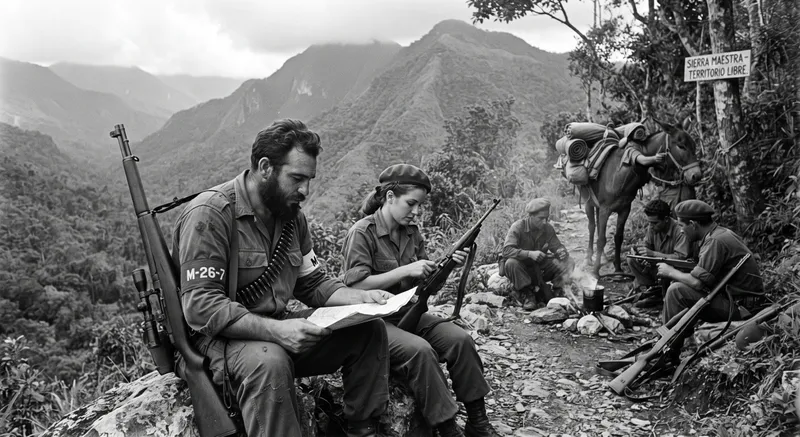
The Cuban Revolution: Guerrillas in the Sierra Maestra
A small band of bearded fighters in the mountains toppled a U.S.-backed dictator and turned a Caribbean island into a Cold War flashpoint.
WOW Score
Fidel Castro and a small group, including Ernesto 'Che' Guevara, launched a guerrilla war against the dictatorship of Fulgencio Batista from the mountains of eastern Cuba.
After a failed initial assault in 1953, the rebels rebuilt, waged a mobile insurgency, and rode a wave of popular discontent to Havana by January 1959.
The new government nationalized assets and drew Washington's hostility, pivoting Cuba toward the Soviet bloc and into the heart of the Cold War.
"Eighty-two men landed in a leaky boat; less than three years later they ruled a nation. The revolution reshaped the Americas."
Castro's victory expelled U.S. influence, aligned Cuba with the Soviet Union, and triggered the Bay of Pigs and the Missile Crisis. It became a potent symbol of anti-imperialism across Latin America and the Global South.
The Full Story
From Moncada to the Mountains
The revolution's opening attack failed, but Castro's trial defense 'History will absolve me' became its manifesto. Exile in Mexico forged the core of the rebel army.
The Insurgent Tide
A combination of guerrilla tactics, urban support, and Batista's corruption eroded the regime until its forces collapsed and its leader fled.
The Cold War Fault Line
Land reforms and nationalizations alienated the U.S., pushing Cuba into Moscow's orbit and setting the stage for the crises of the 1960s.