Crossing the Rubicon: The Die Is Cast
When Julius Caesar led his legions across a small Italian river, he committed treason and started a civil war that ended the Roman Republic.
WOW Score
Rome's Senate, fearing Caesar's power after his Gallic conquests, ordered him to disband his army and return as a private citizen. He refused.
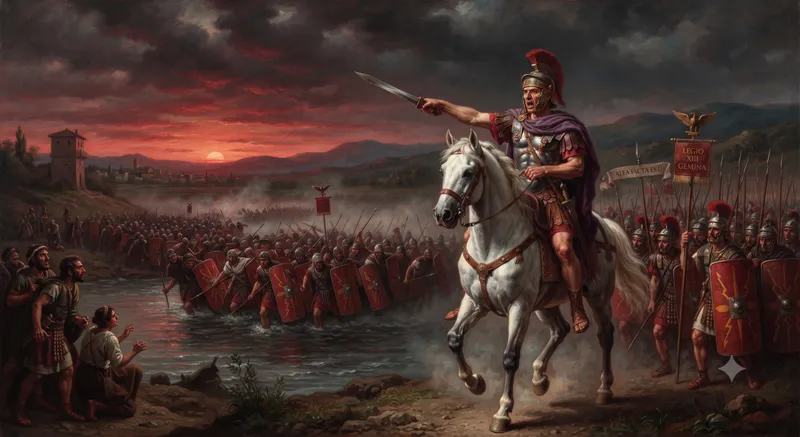
Leading the Thirteenth Legion across the Rubicon river the legal boundary of his province Caesar committed an act of war against the state.
The resulting conflict toppled the Republic. Caesar prevailed, was assassinated, and his heir founded the imperial dynasty.
"The law forbade a general to bring his army into Italy. Caesar crossed anyway, saying the die was cast and there was no going back."
The crossing triggered a civil war that made Caesar dictator for life and destroyed the Republic's institutions. It set Rome on the path to empire, and gave the world a phrase for the point of no return.
The Full Story
A Point of No Return
Roman law made the Rubicon a bright line: crossing it with troops was treason. Caesar's step was irreversible, a calculated gamble on his destiny.
The Republic's Last War
Pompey and the Senate fled Italy; Caesar chased them across the Mediterranean, defeating rival after rival until none remained.
From Republic to Empire
Caesar's dictatorship and assassination opened the door to Augustus, who ended the pretense of republican rule and began the empire.