The Brusilov Offensive: Russia's Last Great Surprise
In the summer of 1916, a Russian general launched a devastating surprise assault that nearly knocked Austria-Hungary out of the war.
WOW Score
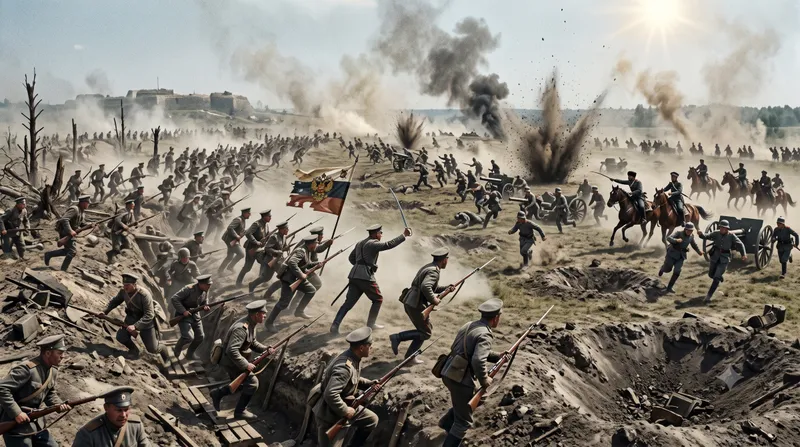
General Aleksei Brusilov rejected the standard tactic of one massive, predictable blow. Instead, he planned simultaneous attacks all along the Southwestern Front, preventing the enemy from guessing where the main thrust would come.
The assault shattered Austro-Hungarian lines and captured hundreds of thousands of prisoners. For a moment, the Eastern Front looked decisive in Russia's favor.
But Russia lacked the reserves and logistics to exploit the breakthrough. The staggering casualties further exhausted an already strained army and society.
"Instead of one big push, Brusilov struck everywhere at once. The Austro-Hungarian line shattered along a 300-mile front."
The offensive inflicted the worst defeat in Austro-Hungarian history and forced Germany to divert troops from the Somme and Verdun. It also pulled Romania into the war and, by straining the Russian Army further, helped ignite the unrest that became the 1917 Revolution.
The Full Story
A New Way to Attack
Brusilov's innovation was reconnaissance, deceptive preparations, and multiple coordinated breakthroughs rather than a single massed blow. It was a doctrinal leap that later armies would study closely.
The Central Powers Reel
Germany rushed troops south to stabilize its ally, easing pressure on the Western Front at the Somme and Verdun. Austria-Hungary never fully recovered as a independent fighting force.
Seeds of Revolution
The enormous losses deepened Russian war-weariness. Within a year, the empire was convulsed by revolution a reminder that even a brilliant victory could accelerate a collapsing state's fall.