The Berlin Blockade: The First Crisis of the Cold War
By sealing off a city, Stalin hoped to force the West out of Berlin and instead forged the alliance that would confront him for decades.
WOW Score
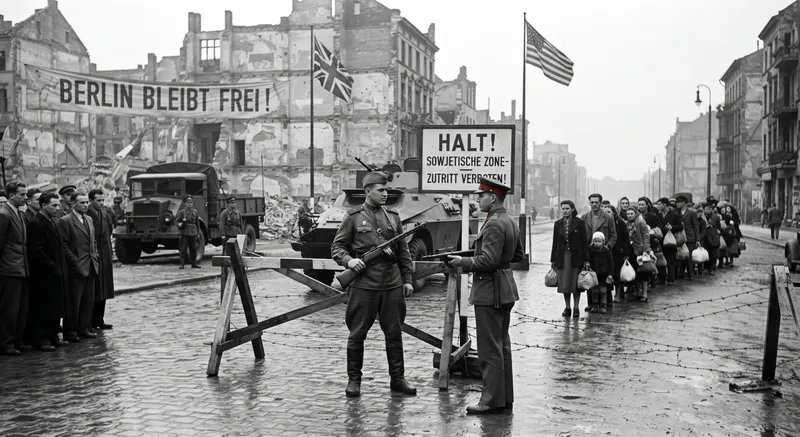
In 1948, the Western Allies moved to unify their German occupation zones and introduce a new currency. The Soviet Union, alarmed, severed all ground links to West Berlin to pressure them out.
The move backfired. Rather than abandon the city, the Allies mounted the Berlin Airlift, supplying the isolated population from the sky.
After nearly a year, the Soviets conceded and reopened the land routes, having failed to dislodge the West or prevent the founding of a separate West German state.
"The first major test of wills between East and West ended not with a battle, but with a cease of the siege the besieger could not win."
The blockade transformed the Cold War from uneasy cooperation into open confrontation. It triggered the Berlin Airlift, accelerated the creation of West Germany and NATO, and locked in the division of Europe for a generation.
The Full Story
The Currency Trigger
The introduction of the Deutsche Mark in the Western zones was seen by Moscow as an economic threat, prompting the attempt to squeeze Berlin into submission.
A Gamble Lost
Stalin assumed the West could not sustain the city. The airlift proved him wrong and exposed the limits of Soviet coercion in the heart of Europe.
The Lines Harden
Out of the crisis came NATO and the two Germanys. The blockade marked the moment the postwar alliance irrevocably fractured.