The Battle of Britain: The Few Who Stood Alone
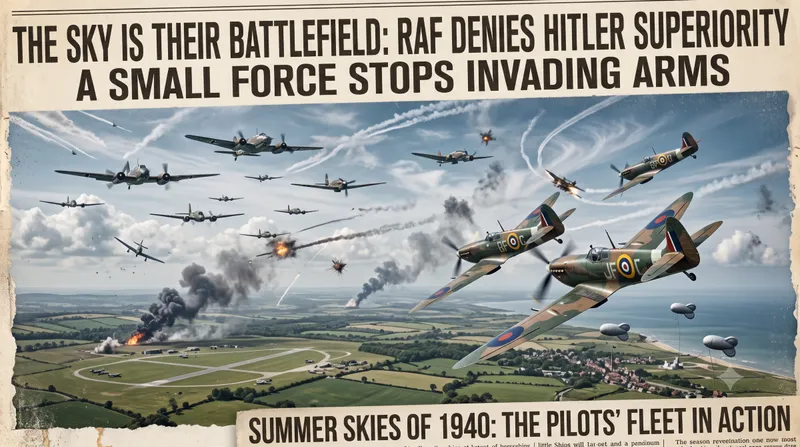
In the summer skies of 1940, a small force of RAF pilots denied Hitler the air superiority he needed to invade Britain.
WOW Score
After Dunkirk, Britain stood alone. Germany's Luftwaffe aimed to destroy the Royal Air Force and win control of the skies ahead of a cross-Channel invasion.
Day after day, Spitfires and Hurricanes intercepted waves of bombers. Radar, coastal observers, and a centralized control system let the outnumbered defenders concentrate where they were needed most.
By autumn, German losses were unsustainable. Hitler postponed the invasion indefinitely. Britain had survived its finest hour.
"Never in the field of human conflict was so much owed by so many to so few. The island held, and the invasion was called off."
Britain's victory forced Hitler to abandon Operation Sea Lion and shift his gaze eastward toward the Soviet Union. It kept a free base in Western Europe from which the later D-Day assault could be launched, and proved that the Luftwaffe was not invincible.
The Full Story
The Radar Edge
Britain's Chain Home radar network gave early warning of raids, letting controllers scramble fighters efficiently. Technology and organization offset Germany's larger fleet.
The Target Shift
When the Luftwaffe switched from attacking airfields to bombing London, it gave the exhausted RAF a reprieve and turned the battle into a test of civilian nerve as much as air power.
Why It Mattered
A defeated Britain would have left Hitler master of Western Europe and removed the springboard for the eventual liberation. The battle preserved that future.