The Armenian Genocide: A Crime Erased and Remembered
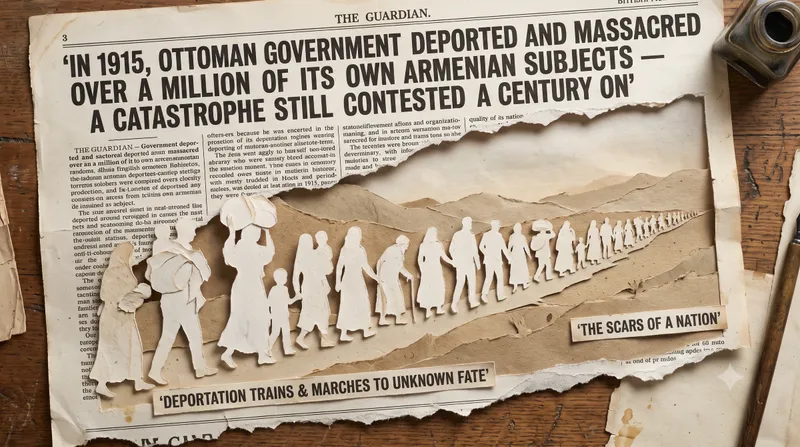
In 1915, the Ottoman government deported and massacred over a million of its own Armenian subjects a catastrophe still contested a century on.
WOW Score
As the Ottoman Empire collapsed during WWI, its government targeted the Armenian population a Christian minority accused of sympathizing with the enemy. In 1915, leaders and intellectuals in Constantinople were arrested, then mass deportations began.
Hundreds of thousands were forced on death marches into the Syrian desert; countless others were killed outright. Estimates of the dead range from 600,000 to over a million.
The Ottoman government denied the events as wartime necessity, beginning a denial that persists to this day and that has made the genocide one of history's most contested crimes.
"A people were marked, uprooted, and marched into the desert. The crime was committed in plain sight, and the denial began the same day."
The mass killing of Armenians is widely recognized by historians and many nations as the first genocide of the modern era. It shaped the 20th century's legal concept of genocide, influenced the Armenian diaspora worldwide, and remains a live political wound between Turkey and the international community.
The Full Story
A Calculated Removal
The deportations were organized by the state through special units. The intent, according to a broad consensus of scholars, was the elimination of the Armenian presence from the empire not merely relocation.
Witnesses and Memory
Foreign diplomats, missionaries, and journalists documented the atrocities in real time. Survivors carried the memory into a global diaspora that has kept the cause alive for generations.
The Word 'Genocide'
The Armenian catastrophe helped inspire Raphael Lemkin to coin 'genocide' in the 1940s and to pursue the UN convention against it. Recognition remains politically charged, but the historical record is overwhelming.