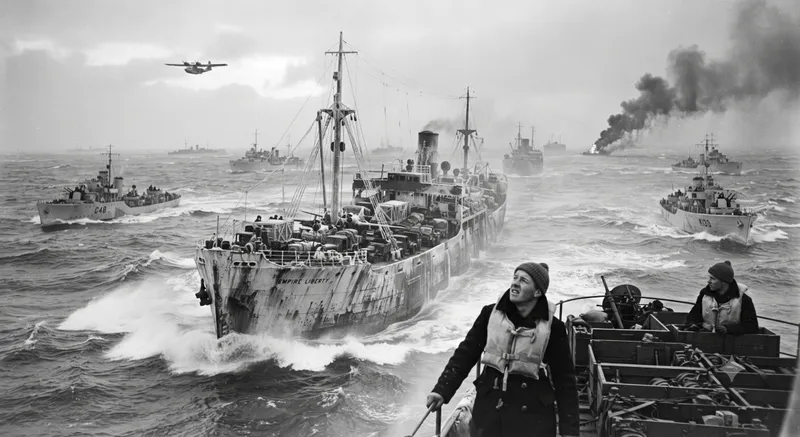
The Arctic Convoys: Lifeline to Russia
Through freezing seas and Nazi wolfpacks, Allied ships carried the supplies that kept the Soviet Union in the war.
WOW Score
After Germany invaded the USSR, Britain and later the U.S. shipped war materiel to northern Russian ports via convoys across the Arctic Ocean the most dangerous sea route of the war.
Ships ran a gauntlet of U-boats, surface raiders, and aircraft, in near-constant darkness, ice, and storm. Losses were appalling on the worst runs.
Yet the vast majority of cargo got through, arming Soviet forces at a moment when they desperately needed it.
"Sailors froze at their guns while U-boats and the Luftwaffe hunted them. One in four ships on some convoys never arrived."
The convoys delivered tanks, aircraft, and food that sustained the Red Army on the eastern front, honoring the Allied pledge to aid the USSR. The campaign forged a fragile wartime alliance and highlighted the brutal cost of keeping it.
The Full Story
The Murmansk Run
Convoys assembled in Britain and Iceland, steaming past Norway into the Barents Sea. German forces based in Norway struck relentlessly at the slow, exposed columns.
PQ-17's Disaster
The scattering of Convoy PQ-17 after a feared surface attack led to catastrophic losses, a cautionary episode that reshaped convoy tactics.
Keeping the Alliance Alive
Lend-Lease aid via the Arctic route materially supported the eastern front, honoring a promise that helped keep the Grand Alliance intact.