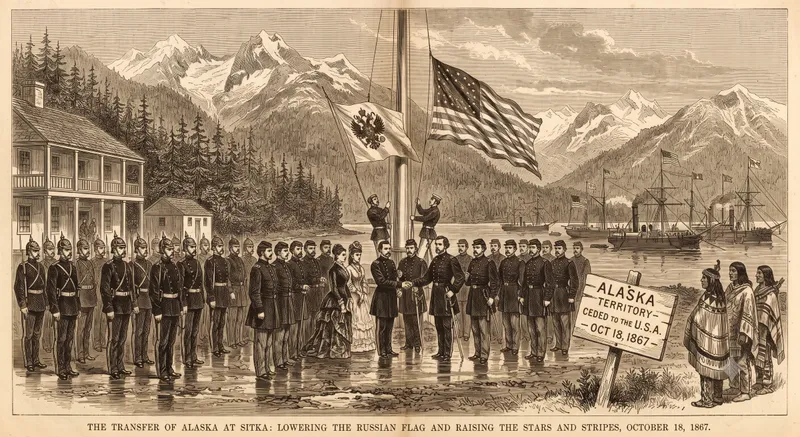
The Alaska Purchase: Seward's Icebox
The U.S. bought a frozen wilderness from Russia for two cents an acre and was widely mocked for buying a 'refrigerator.'
WOW Score
Russia, wary of British rivalry and needing cash, offered to sell its distant Alaskan territory to the United States.
Secretary of State William Seward negotiated the deal for $7.2 million, about two cents per acre, and the Senate ratified it.
Initially ridiculed, the territory later revealed vast natural riches and strategic value.
"Critics called it Seward's Folly. Decades later, gold and oil turned the folly into one of history's great bargains."
The 1867 purchase doubled the size of U.S. territory and later yielded gold, oil, and strategic position. What seemed absurd became a cornerstone of American wealth and power.
The Full Story
Why Russia Sold
After losing the Crimean War, Russia saw little way to defend or profit from its remote American colony and preferred a friendly buyer.
Seward's Gamble
The purchase was mocked in the press, but Seward foresaw the value of expansion across the continent and beyond.
The Payoff
The Klondike gold rush and later North Slope oil transformed Alaska from folly to fortune.